Letter 2

May 2026
Dear Chloe,
Thank you for taking the space to dive in. What a terrific snapshot of you, your work, your world. Whole & tangible. How great to have this extended record of what is floating in your mind creatively at this moment in time.
Duality is at the core of my creative interests. Similar occurrences happening across varied contexts. Replication, response, coincidence, history repeating itself, pattern, echoes, myths, links across time and space. Your work probes these things. Creative echoes, writers responding to artists, artists responding to writers...podcasts responding to artists responding to scientists, etc...how the world spins!
Hop hop hopping around. Your story frame from the Paris projection room works for my brain. Certainly, this is feeling. You sketched your homeworld deftly. I resonate with Edge places. Dundalk does have that quality in ways.
To answer your question about setting up screen service, it was led by a yearning to connect to the art landscape in Ireland. I was living in Montreal at the time. I was inspired by media arts structures in Canada & the US. Community and collaboration is often at the core. The confidence to get started came after I did a brilliant internship with the video team at MoMA, New York. They make filmed content about the museum and art in general. The most fun online "content" to create. We filmed conservationists working on some of the most important paintings in history. I got very excited about utilizing 'online' for community, connection and creative happenings. The goal is to exist more in-person also, a dual existence.
I see a connection between your dad's bees and trees and your statues.
-Trees- Bees - Statues-
Grasping time in objects, the permanence of statues, "held in stasis"- what breaks permanence? Weather, disease, attacks...maybe not “breaking" permanence, more so recording time in an unbiased way. What is more unbiased than a tree and its internal records of time? I recently saw a piece of coral at the Natural History Museum in London. It was a large, white oblong shape, with a thin red line delicately running across its body. During its lifetime, the sea in which it lived was polluted with iron salt from a nearby factory. The coral absorbed it and then continued to grow around it once the pollution stopped. Tree rings show similar things: pollution, storms, disease.
Beekeeping history in your family, the passing down of craft/structure/time-passing methods. Replication in a deep feeling form. Sorry to hear the bees are dying. I wish that was not true! They are an innocent, bystanding record of changes to our time. I hope I have added to this kind of word 'montage' that you initiated. I'm certainly understanding more of your method. How do you organise? (practice, days, thoughts, files). Feel free to elaborate, respond, refresh on anything. What is next? The Paris work sounds v exciting.
Running out of space!! Over and out!
Ellen
Dear Ellen,
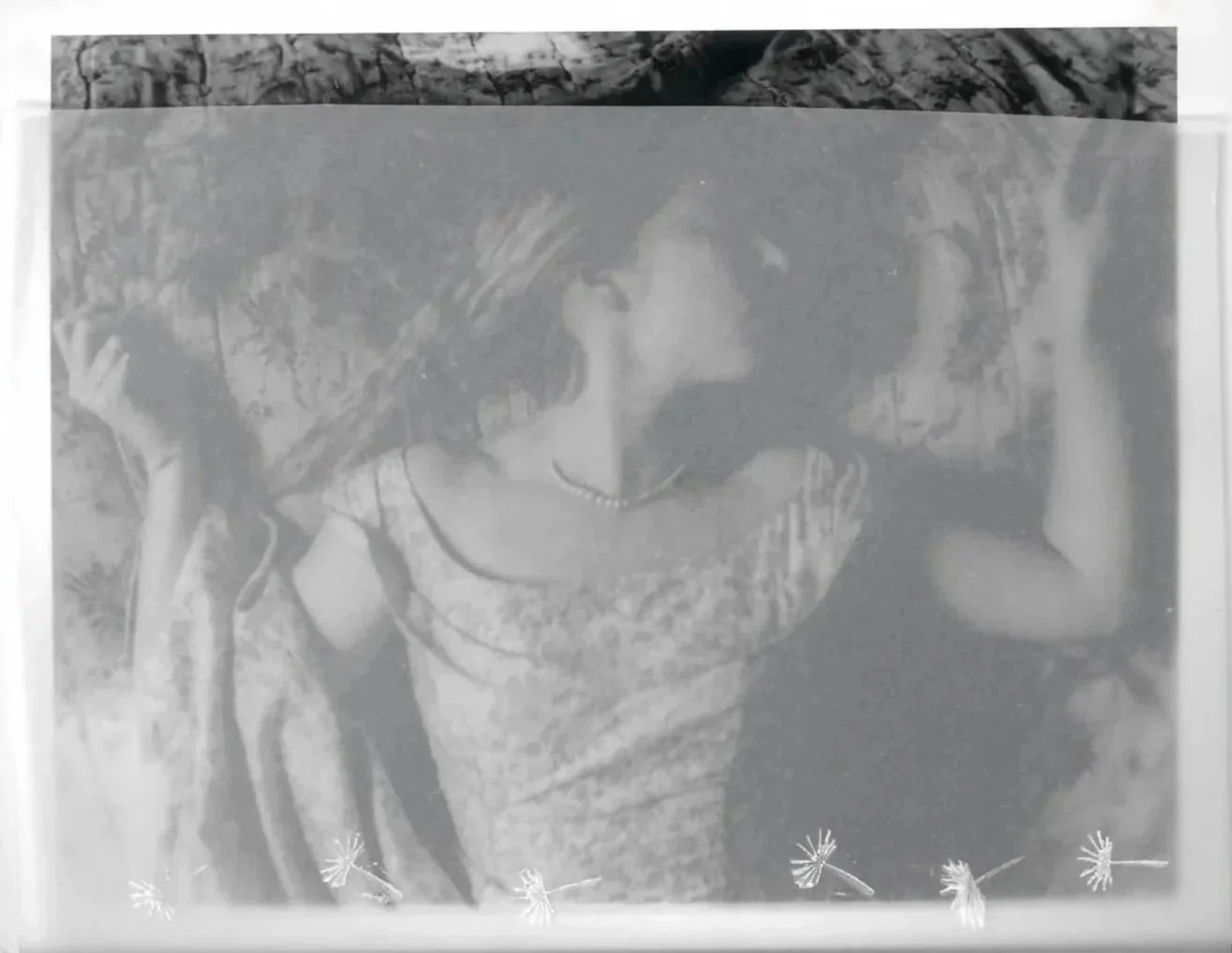
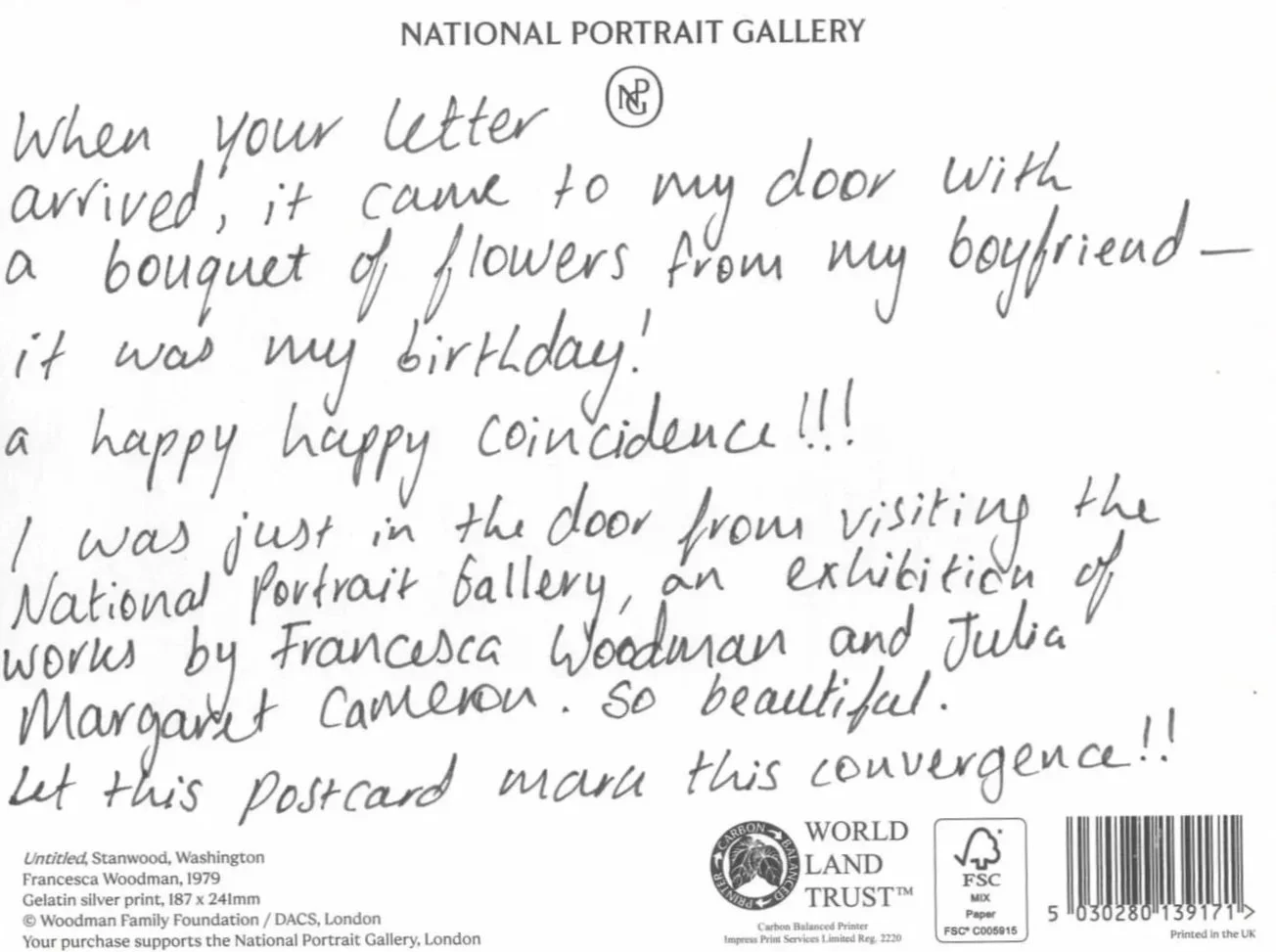
Thank you so much for your letter and for the Francesca Woodman and Julia Margaret Cameron exhibition postcard. A lovely marker of the moment! I've always loved the process artefacts in Julia’s photographs - those streaks, swirls, etched lines and fingerprints. And that she saw something in their qualities beyond technical flaws. I read somewhere that when she took up photography, she converted her coal shed into a darkroom to make her work, so residual motes of coal dust must have made their way into her emulsions and made their marks.
It's really interesting to read that your time in Canada was inspiring for screen service. I spent a couple of weeks in Toronto and Montreal a few years ago and while I wasn't there long enough to get a thorough understanding of the scene, I was left with an impression there was a range of artistic spaces, programmes- some intermittent and short run, some established and ongoing. It felt lively. They have that great legacy of the National Film Board of Canada (I remember their logo cropping up at the end of a lot of experimental artist films I watched in college). I'm really saddened by the decline of artist-led spaces and initiatives in Ireland, which is intrinsically connected to the lack of accessible and affordable space here. The diverse activities of these initiatives can really reflect the nuance and non- reproducible qualities of the place, community and time that they unfold in.
They're such an important way for a place and its inhabitants to come to understand itself. It's interesting also to learn how your past work with museum collections dealt with issues around digital outreach and access. And that this informs the quality of your programming now - balancing the inclusivity of online programming with the unquantifiable particularities and collisions that happen when interested people are in a room together around artworks. On that note, it was so nice that we got the chance to meet in person in between letters. And in Unit 44 also, one of Dublin's few remaining artist- led spaces. I've seen such great and diverse things there. Long may it continue!
I like your idea of unbiased recordings - the environmental information held in the oblong piece of coral and your observation of time / events / particulate matter embodied in the growth rings of trees. Quiet record keepers. They're testimony to how different bodies register the world and its forces in different ways. And a vital reminder of the limits of our own experiences and that we can (and must) learn by paying attention to how the world and its forces - material & social - impact others outside of ourselves. It makes me think of a passage in the book Emergency by Daisy Hildyard. She writes at one point about a childhood memory of being in primary school and being seated at the same wooden desk every day, and how when her attention for schoolwork would wane, she would become absorbed by the intricacies of the desk's woodgrain. She begins to infer from it the forces and events of the distant and recent past that it embodies: landscape, weather, time, the labour of the carpenter and the etched graffiti of other bored past students. Her close focus makes this everyday wooden object a strange kind of time dilation. But then trees do confound time.
Have you ever seen The Man Who Planted Trees (L'homme qui plantait des arbres)? It's on YouTube now. It's based on a book (which I haven't read) and we had the animation adaptation on VHS growing up. It's about a solitary shepherd and his single-handed effort to reforest a barren valley near the Alps. Eventually, thanks to his consistent and daily work, a forest flourishes. The simple fact that trees outlive us - trees bearing witness to multiple human life spans and not the other way around - means that when the shepherd plants a seed, either consciously or perhaps on some unconscious level, he contemplates and contributes to a future that does not involve him directly. So, it's a gesture beyond individualism. The piece is a lovely invitation to viewers to think about what their contributions to the future might be, whatever the constraints of the present. I think this is the first time I saw an animation as a child and understood that it was frames of images playing out across time. Which was probably because it was made using drawings, marks of the hand, that as a small child I was able to recognize because small children make marks. And unlike other animations more commonly broadcast that were more cartoon- like with opaque, flat colours, The Man who Planted Trees really laid bare the elements of its making - language meets the quality of the artists hand, meets time. And it was really beautiful. Process, I suppose. I just checked & it's a Canadian film production too! (loop!) The writer is Jean Giorno. And the filmmaker is Frederic Back.
The cave is generally acknowledged as the first cinema (I'm thinking of Werner Herzogs' Cave of Forgotten Dreams and how those incredible cave drawings would have become like frame animations when activated by the flicker of a live flame) but there's something so filmic about the ordinary occurrence of light filtering through the leaves of a big tree on a sunny day, and the animations it projects on to the ground. Maybe this makes trees particularly apt subjects for animation. On maybe it makes them the best animators - relaying the atmospheric particularities of the moment through layers of light & shadow. But then as you (and Daisy Hildyard) noted, they're also chronicles of deeper time and centuries- long histories through their growth rings. Pretty wild. I watched Wim Wenders Perfect Days a few months ago. I won't spoil it. It's a sort of exploration of Tokyo following a man who works as a janitor in public restrooms, a character who might ordinarily fall below the threshold of who typically warrants observation. It's a very beautiful film, rooted in ordinariness and routine. And art is threaded throughout it also. Not in the context of big galleries or cinemas, but manifested in the janitor’s personal cassette collection he has assembled with care over time that he listens to in his van throughout the day, and in the single skywards photograph he takes every day from the same place where he sits beneath the trees during his lunch break. At the very end, after the credits have rolled, the screen lights up with a shot of leaves against the sky and then appear the words: Komorebi. The Japanese word for the shimmering of light and shadows that is created by leaves swaying in the wind. It exists only once, in that moment. The fact that words exist for phenomena in one language and not others is another lovely sign that the world registers and resonates differently across people and cultures in specific and untranslatable ways. Komorebi itself is such a lovely word- how it looks and sounds, but also in its encapsulation of something so fleeting and unique. A nice little word-shaped resistance to homogeneity. Maybe we need new words. Or maybe we just need to become better attuned to the different ways the world sends signals our way, both directly and obliquely. Like Hildyard's reading of the histories embodied in her desk’s wood grain, or what the particularity and ephemerality of a local art scene tells us about a shared there ' and ' now'. Or your piece of coral.
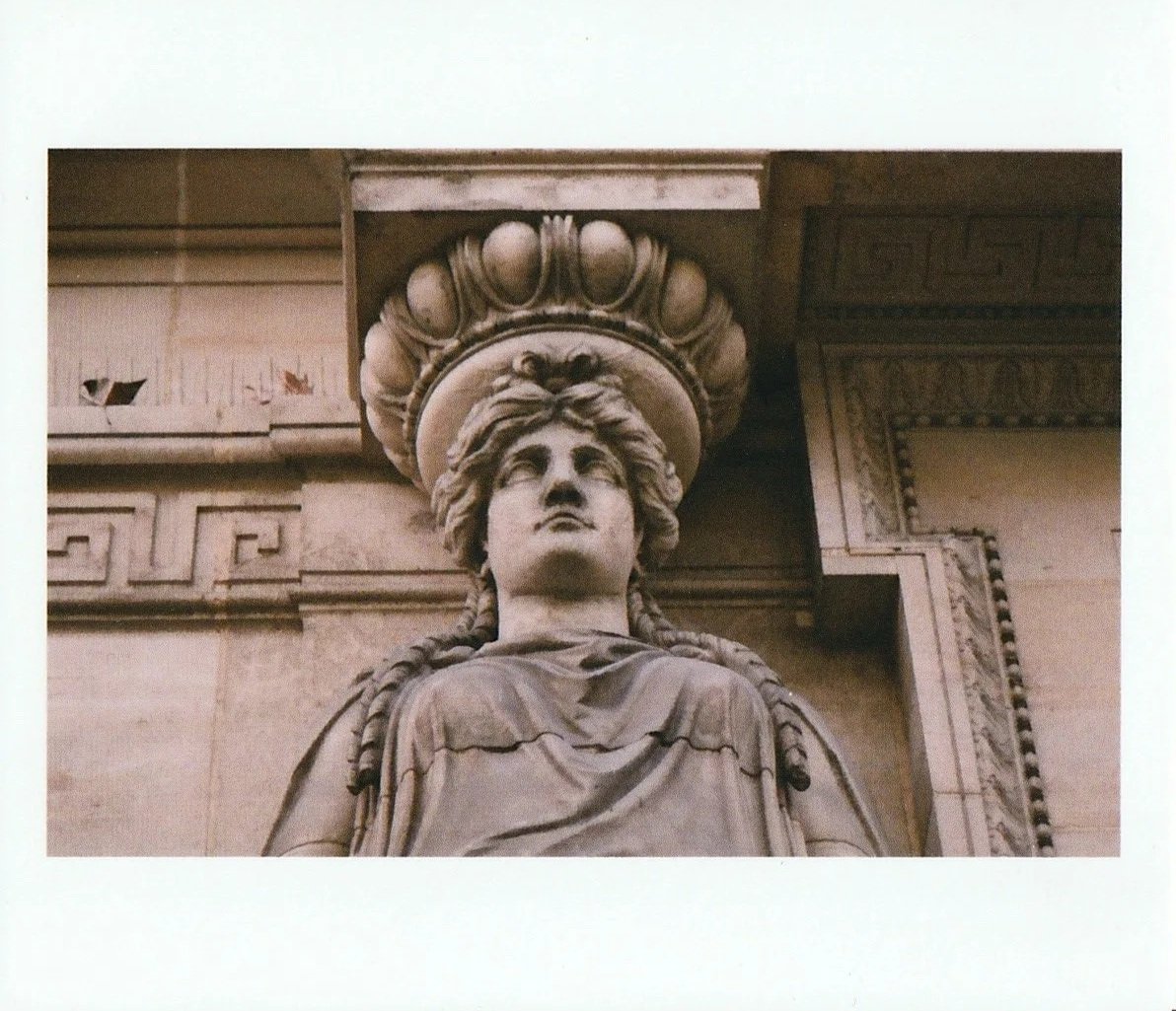
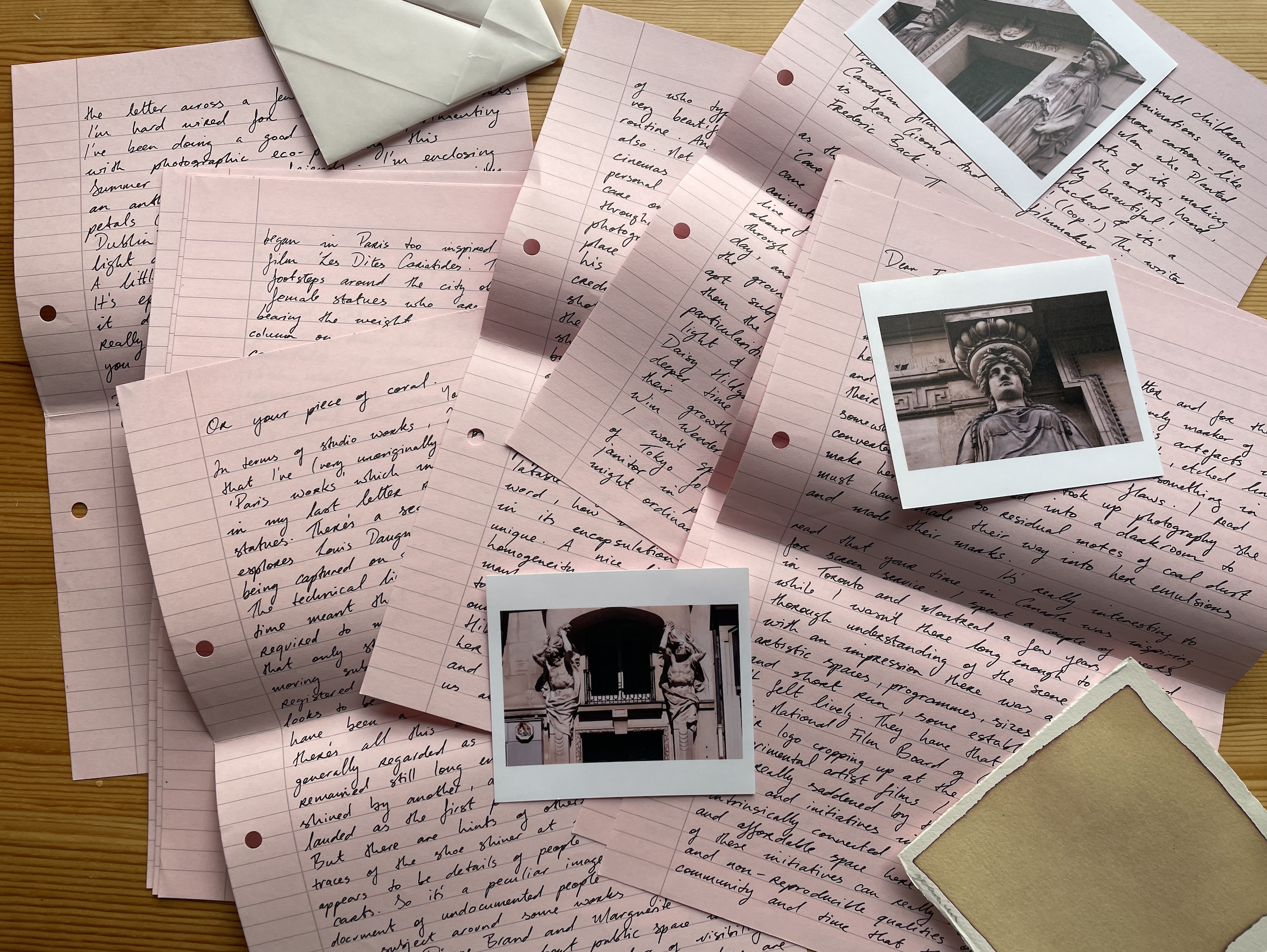
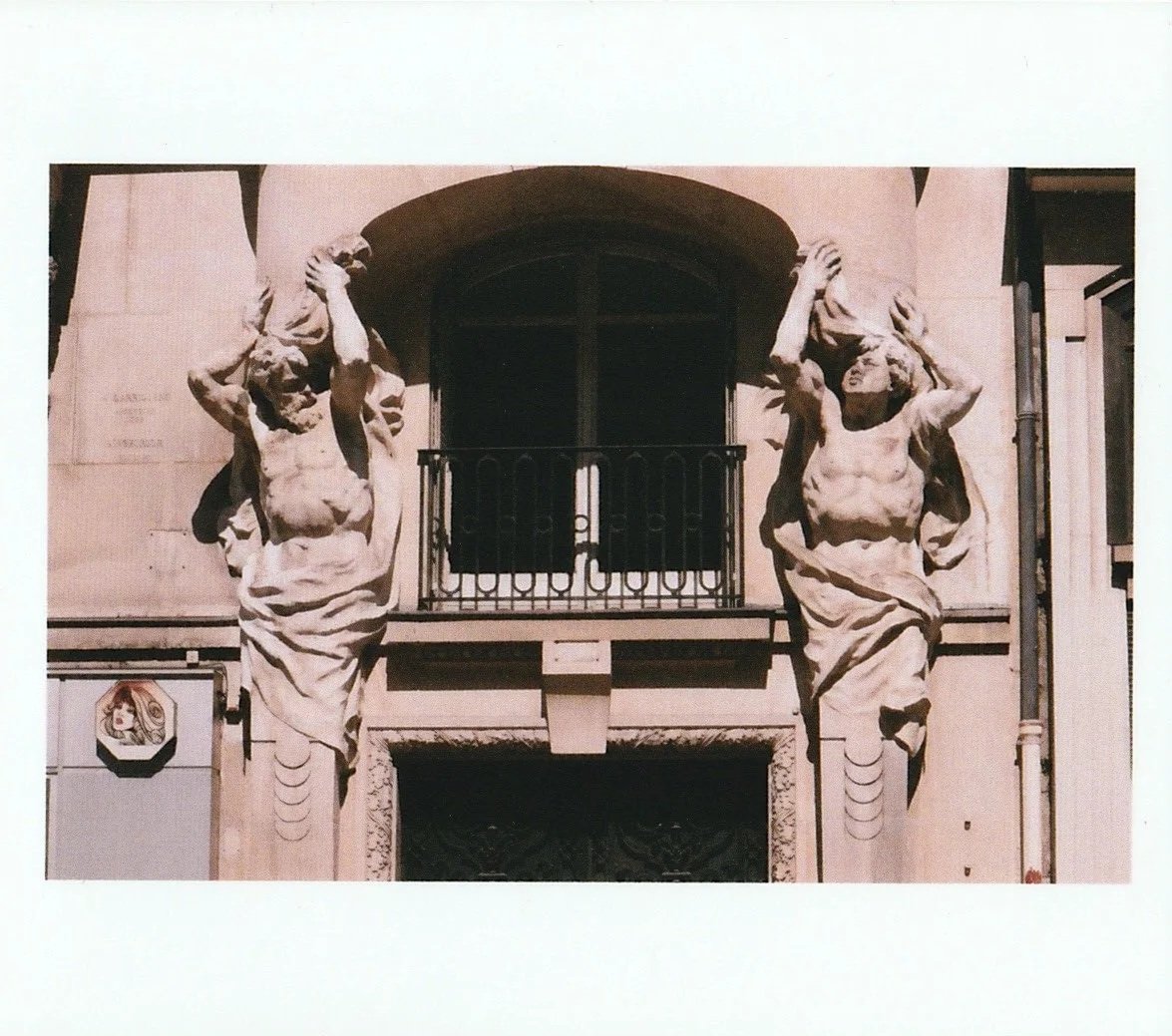
You asked what's next. In terms of studio works, I'm finishing three pieces that I've (very unoriginally!) been referring to as Paris works, which include the film I mentioned in my last letter, revolving around the Verdigris statues. There's a second short film too that explores Louis Daguerre's first picture of a human being captured on the streets of Paris in 1838. The technical limitations of photography at that time meant that very long exposures were required to make an image, with the result that only static subjects were captured and moving subjects were either blamed are never registered at all. The street Daguerre photographed looks to be empty when in reality it would have been a bustling morning scene. So there's all this absence. The only person generally regarded as 'captured' is a man who remained still long enough to have his shoes shined by another, and he is subsequently lauded as the first person to be photographed. But there are hints of others in the image- traces of the shoe shiner at work and what appear to be details of people (women?) and carts. So it's a peculiar image. Kind of a document of undocumented people. I'm weaving this subject around some works by Roland Barthes, Dionne Brand and Marguerite Duras. It's kind of a piece about public space in photographs and films. And orders of visibility/ invisibility that play out there. These ideas are carried through a photo publication that began in Paris, too inspired by Agnès Varda's film Les dites cariatides. The work traces her footsteps around the city, observing these neo-classical female statues who are regularly depicted as bearing the weight of buildings, acting like a column on their facades. Despite her load, the cariatide’s expression is always depicted as serene. Varda makes a great comparison between the expression of the female cariatide and her male counterpart, Atlas, who, carrying the world on his back, grimaces and struggles. There are a handful of male cariatides around the city, and like Atlas, they also visibly portray their strain. I suppose it's a piece about women and work and invisible labour. And public space. And being a fan (❤️).

A friend of mine is contributing some writing which I'm excited about. She's really great. I'm very grateful to Temple Bar Gallery + Studios for the support with that Residency. It's very energising to work somewhere new.
Then I'm going back to make more works in my hometown. I got some funding to research an old, wild, postcolonial orchard on the land around my folk's house. My dad keeps his beehives there. With climate breakdown and the increasing number of storms we’re having here in Ireland, a few of the older trees have come down. I don't think the rest are long for this world, so I figure some work needs to be done around them. With that in mind, I've been writing something to potentially frame a future film that involves two characters, one from a Virginia Woolf story and one from the lyrics of a Woody Guthrie song. Both figures sleep in an orchard. One has fallen asleep under a tree while reading a book on a sunny day. The other one is a migrant farm worker who, with no home, sleeps outdoors after their day's work out in the elements and under the moon. I suppose this is going back to how the world registers so differently and, sadly, so unjustly across different bodies. Because while it is absolutely true that trees are indeed about the future, all of our future, they are also, in another sense, about immediate survival and the short term for others. I've been reading about shade equity lately - how shade exists for some as a leisure or aesthetic amenity, while for others it means essential relief from the elements. And like all issues of spatial injustice, the lack of shade/shelter disproportionately impacts low-income, working-class communities, people of colour. It's a mark of my privilege that my experience of sitting under trees has been mainly for pleasure, while for others sitting beneath a tree means basic, elemental shelter. I don't think I can speak about shelter and not mention the shameful treatment by the government and Waterways Ireland of homeless people in Dublin, specifically in relation to the (privately hired) fences erected around the public canal this summer to prevent people from taking refuge there. First, it's the fault of years of neoliberal government policy that so many people in this country are without homes. And then to fence off the public canal and deny human beings the primary, elemental shelter that the trees along it provide is so wrong and so callous. I don't think I can write about homes either without acknowledging that it's a privilege for me to get to go home and make work in a world where so many people don't have a home or are denied the right to return to theirs. I'm thinking now about the people of Palestine who can't go home. And what this fact tells us about the world.
You asked how do I organise (!) I tend to research a subject or topic and artworks emerge from that body of research. I never have a defined piece in mind when starting out. Arthur Sze has a wonderful poem called Black Center and in it he writes:
“Jefferson once tried to assemble a mastodon skeleton on the white house floor but, with pieces missing, failed to sequence the bones.”

It's an amazing line and such a brilliant image. To use it speaks to the process of sequencing and editing something when you can't anticipate its complete shape. The contours of the work are something to discover through experimenting and testing. I do try to preserve something of the vividness of the initial note or sketch as ideas make their way into an artwork. Leaving space is important for me - I find it's very easy to kill an artwork by being didactic. I seem to work best (or most happily) when I work on a few things simultaneously and move between them. In terms of how all that plays out, I've noticed that my works can sometimes cannibalize parts of other works in progress. Or a piece might accumulate too many offshoots and become unwieldy, so will have to fragment into two pieces. Or a piece will just get cut out right and just stay on as a fragment in the archive.
(The ‘archive’ includes notebooks, folders, bases, hard drives...).
The world is a silly, alluvial thing with no hard boundaries. Subjects, when researched further, often intersect with others and it’s interesting to me to discover points of overlap in a way that is not heavy-handed. I make time to read and watch films...swim, walk, garden ... But these activities are as much about being a person as they are about being an artist. Is that organisation? You manage several (often quite different) projects simultaneously too - how do you organise?
I hope you're doing well in these early days of Autumn, Ellen. And I'm sorry my response has taken some time again - I did the same thing as the last time and wrote the letter across a few sittings. I think I'm hard wired for increments and intervals. I've been doing a good bit of experimenting with photographic eco-processing this summer with two friends. I'm enclosing an anthotype test created using geranium petals (gathered in the people's park in Dublin) and two weeks’ worth of August light and shade - all public amenities. A little marker of the end of summer. It's ephemeral - UV rays will eventually break it down (moving image?), so it can never really be owned by anyone, but I hope you enjoy it while it's here.
Best for now,
Chloe
References from these letters
References from these letters
Francesca Woodman, from Deborah Levy’s Things I Don’t Want to Know, 2013. Tate
Julia Margaret Cameron, Her Working Methods. Victoria and Albert Museum
National Film Board of Canada (NFB). Official website
Unit 44 / Kirkos. Dublin-based, artist-led space. Kirkos Ensemble
Daisy Hildyard, Emergency. Fitzcarraldo Editions
Jean Giono, The Man Who Planted Trees (L’homme qui plantait des arbres). Book / Animated film on YouTube
Werner Herzog, Cave of Forgotten Dreams. IMDb
Wim Wenders, Perfect Days. IMDb*
Louis Daguerre, Boulevard du Temple, Paris, 1838. Image and historical reference
Virginia Woolf, In the Orchard. Literary Hub
Woody Guthrie, Pastures of Plenty. YouTube
* At the 76th Berlin International Film Festival, Wenders said: “We have to stay out of politics because if we make movies that are dedicatedly political, we enter the field of politics. But we are the counterweight of politics, we are the opposite of politics. We have to do the work of people, not the work of politicians.” I couldn’t disagree more with this statement.